
Critical thinking
Critical thinking training for teams
- Tailored after a scoping call
- In person or remote
- Better decisions
- Built for the AI era
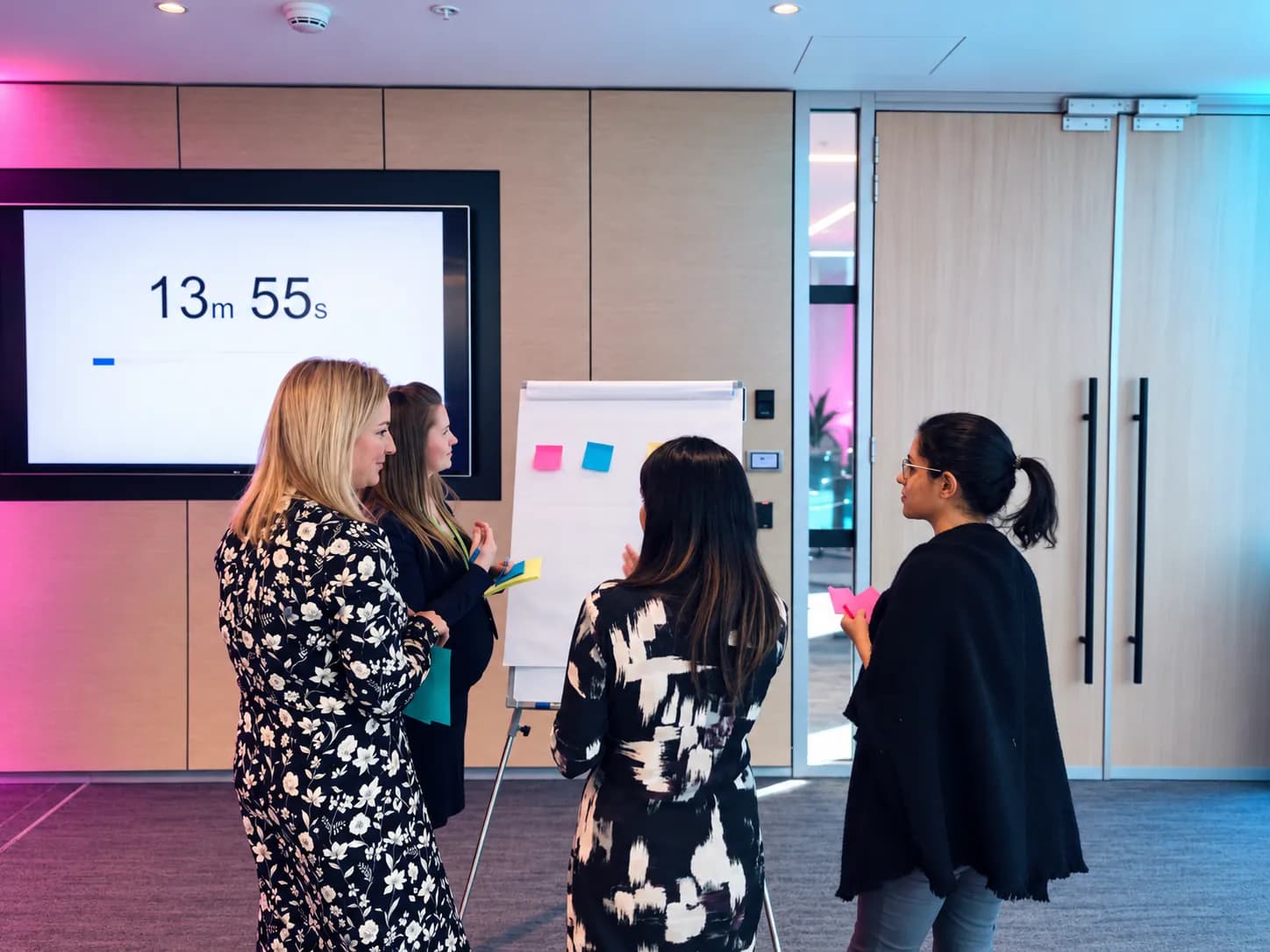
Every team makes decisions based on information, arguments and assumptions. Some of those decisions are good. Others rest on a confident claim nobody checked, a number taken out of context, a bias nobody noticed or a recommendation that sounded authoritative because it was well written. As AI tools draft, summarise and recommend more of what teams read, the risk grows. It has never been easier to produce a plausible answer, and never more important to know whether it is right.
Collective Campus has been building team capability in Australia since 2015. Critical thinking training is designed for the way work happens now: teams surrounded by information, under time pressure and increasingly working alongside AI. The training helps people question claims, test reasoning, recognise bias, interrogate AI output and make better decisions together. It is practical, applied to the team's own decisions and documents, and it treats critical thinking as a team habit, not just an individual skill. It connects closely to psychological safety, because teams can only think critically together when people feel able to challenge ideas.
Quick answer
Critical thinking training helps employees analyse information, evaluate arguments and evidence, recognise cognitive biases, question assumptions and make sound decisions. Modern programs also teach people how to interrogate AI-generated content and when to rely on their own judgment. Effective training uses the team's real decisions and documents, practises structured techniques such as assumption testing and pre-mortems, and builds habits the team keeps using. Collective Campus tailors every program after a scoping call, with no fixed format, length or group size, and does not publish prices.
What critical thinking is
Critical thinking is the disciplined process of analysing and evaluating information to reach a well-reasoned judgment. In practice, it means asking good questions before accepting a claim: what is being said, what evidence supports it, what assumptions it rests on, what alternatives exist and what the consequences would be if it turned out to be wrong.
Critical thinking is not the same as being critical. It does not mean finding fault with everything or rejecting new ideas. It means engaging with ideas carefully, including ideas one already agrees with. The best critical thinkers are often the most open-minded, because they are willing to change their view when the evidence changes.
At work, critical thinking shows up in everyday tasks:
- Reading a report and noticing that the conclusion does not follow from the data.
- Questioning a forecast that depends on an unrealistic assumption.
- Recognising that a decision is being driven by sunk cost rather than future value.
- Spotting that an AI-generated summary has left out an important exception.
- Asking what would have to be true for a proposal to succeed.
- Separating what is known from what is assumed in a project plan.
Why critical thinking matters more in an AI world
AI tools can produce fluent, confident text on almost any topic. That is useful, but fluency is not accuracy. AI can invent sources, misread data, overlook context and present a guess as a fact. The more polished the output, the easier it is to accept without checking.
Research suggests that heavy reliance on AI can also change how people think. A study from the MIT Media Lab, Your Brain on ChatGPT, found that participants who used a large language model to write essays showed weaker brain engagement and less ownership of their work than those who wrote unaided. Research from Microsoft and Carnegie Mellon University on generative AI and critical thinking found that knowledge workers who had higher confidence in AI tended to report applying less critical thinking, while those with higher confidence in their own skills reported more. Other studies, including work by Michael Gerlich published in 2025, have linked heavier AI use with lower critical thinking scores through cognitive offloading.
None of this means teams should avoid AI. It means they need to use it deliberately: letting AI do the drafting, searching and summarising while people keep doing the judging, questioning and deciding. Critical thinking is the skill that makes AI safe and useful.
What the training covers
Every program is tailored after a scoping call. Most draw on the following building blocks.
Foundations of reasoning. Participants learn to break an argument into claims, evidence and assumptions, to recognise when a conclusion does not follow and to distinguish correlation from causation.
Evaluating evidence. Teams practise assessing the quality and relevance of evidence: where it came from, how it was gathered, what it does and does not show, and what is missing.
Cognitive biases. Participants learn to recognise common biases that affect workplace decisions, such as confirmation bias, anchoring, availability, sunk cost, overconfidence, groupthink and authority bias, and practise techniques to reduce their effect.
Questioning techniques. Teams practise asking better questions: clarifying questions, probing assumptions, exploring alternatives and testing implications.
Interrogating AI output. Participants learn how to check AI-generated content: verifying sources and facts, testing reasoning, asking the AI to argue the opposite case, spotting gaps and recognising when the question needs human judgment.
Structured decision-making. Teams learn simple decision tools such as framing the decision clearly, widening the options, testing assumptions, considering what could go wrong and setting criteria before choosing.
Thinking together. Teams practise techniques for critical thinking as a group, such as pre-mortems, red teaming, assigned devil's advocates and structured debate, which bring challenge into the process without making it personal.
Daily habits. Participants agree small routines that keep critical thinking active, such as checking one key claim in every important document or writing their own view before asking AI.
Common cognitive biases at work
Bias is not a sign of poor thinking. It is how human minds take shortcuts. The goal is to notice when those shortcuts lead teams astray.
- Confirmation bias. Seeking and favouring information that supports what one already believes.
- Anchoring. Relying too heavily on the first number or idea encountered.
- Availability bias. Judging likelihood by how easily examples come to mind.
- Sunk cost fallacy. Continuing a project because of what has already been invested rather than future value.
- Overconfidence. Being more certain than the evidence justifies.
- Groupthink. Agreeing to preserve harmony rather than testing ideas.
- Authority bias. Accepting a view because of who holds it rather than its merits.
- Automation bias. Trusting the output of a system, including AI, more than it deserves.
- Planning fallacy. Underestimating how long and how much work tasks will take.
- Survivorship bias. Drawing conclusions from successes while ignoring failures that are no longer visible.
Training uses examples from the team's own context, so people learn to recognise these biases where they actually occur.
Interrogating AI: a practical approach
Participants learn a simple approach to checking AI output before relying on it.
- Form a view first. Before asking AI, write a quick view of the answer or the key considerations. This keeps independent thinking active and gives a basis for comparison.
- Ask a good question. Frame the task clearly, with context, constraints and what good looks like.
- Check the facts. Verify specific claims, numbers and sources against reliable references. Treat citations as unverified until checked.
- Test the reasoning. Ask whether the conclusion follows from the evidence, and what assumptions it depends on.
- Look for what is missing. Ask what has been left out, which exceptions apply and whose perspective is absent.
- Argue the other side. Ask the AI, or a colleague, to make the strongest case against the answer.
- Decide who owns the judgment. Be clear that the person using the output remains responsible for it.
This approach does not slow work down much once it becomes habit, and it prevents the most costly errors.
Who critical thinking training is for
Critical thinking matters in almost every role, but programs are tailored to the people in the room.
- Leaders and executives who make high-stakes decisions on incomplete information.
- Managers who review work, approve proposals and coach others.
- Analysts, advisers and policy teams whose job is to evaluate information and give advice.
- Project and delivery teams who plan, estimate and manage risk.
- Professional services teams whose clients rely on the quality of their judgment.
- Graduates and early-career staff who are building their thinking habits in an AI-rich workplace.
- Teams adopting AI who need to use it without outsourcing their judgment.
Critical thinking in different sectors
Government and public sector. Frank, well-reasoned advice is central to public service. Training focuses on evaluating evidence, testing policy assumptions and recognising bias in advice and decision-making.
Financial services and insurance. Decisions involve risk, data and regulation. Training focuses on questioning models and assumptions, recognising overconfidence and checking AI-assisted analysis.
Legal and professional services. Clients pay for judgment. Training focuses on argument analysis, evidence evaluation and the safe use of AI in research and drafting.
Health and community services. Decisions affect wellbeing and safety. Training focuses on evidence quality, avoiding premature conclusions and structured decision-making under pressure.
Education. Educators need to model critical thinking and teach it in a world of AI. Training focuses on questioning, evaluating sources and designing tasks that require genuine thinking.
Critical thinking and productivity
Critical thinking sometimes feels like it slows work down. In practice, it often saves time by preventing rework, avoiding poor decisions and stopping weak projects early. A few minutes of questioning before a decision can save months of effort on the wrong path. Teams that protect time for thinking, rather than filling every hour with meetings and messages, make better decisions. This links to productivity and time management, since reclaimed time is most valuable when some of it goes to genuine thinking.
Where critical thinking training goes wrong
- Too abstract. Logic puzzles and generic examples that never connect to real work.
- Individual only. Training people to think well, then putting them in teams where challenge is not welcome.
- Ignoring AI. Teaching critical thinking as if AI were not changing how people work.
- Anti-AI. Treating AI as the enemy rather than teaching people to use it well.
- No habits. Participants enjoy the session but nothing changes in how decisions are made.
- Leaders exempt. Leaders who do not invite challenge undermine everything the team has learned.
Formats (shaped after a scoping call)
Every program is tailored after a scoping call, so there is no fixed length, headcount or package. What changes from one organisation to the next is the mix of the elements below, chosen to fit the outcome the team needs and the real constraints on its time.
- Focused workshop. A single facilitated session built around one live problem the team brings into the room. Best when the goal is a shared language, a quick diagnosis and a small number of agreed next steps.
- Workshop series. A sequence of shorter sessions spaced out so people apply each idea at work between sessions and bring back what happened. Best when the goal is behaviour change rather than awareness.
- Applied program. Training combined with a real piece of work: a service, process or team challenge the group moves forward while learning. Best when leaders want a visible result, not just a completion record.
- Leadership session plus team rollout. Leaders go first so they can model the behaviour and remove blockers, and then teams follow with sessions that reflect what leaders agreed.
- Coaching and follow-up. Check-ins, clinics or office hours after the formal sessions so teams get help when they hit the hard part of applying the method.
- In person, remote or hybrid. Delivered on site in Sydney, Melbourne, Brisbane and other Australian cities, or live online for distributed teams. Remote sessions are designed for remote work rather than a slide deck streamed over video.
The scoping call covers who is in the room, what is already in place, what success looks like in practical terms and what would get in the way. The design follows from those answers.
What teams leave with
- A shared language for discussing claims, evidence, assumptions and reasoning.
- The ability to spot flawed reasoning and common cognitive biases in real work.
- A practical method for checking and interrogating AI output.
- Better questioning skills for clarifying, probing and testing ideas.
- Structured decision tools the team can use for important choices.
- Group techniques such as pre-mortems and red teaming that build healthy challenge into the process.
- Daily habits that keep independent thinking strong alongside AI.
- A clear rule of thumb for when to rely on AI and when to think it through.
How to tell whether it worked
Agree a few practical measures before the program starts, so success is judged on evidence rather than on how the session felt. Useful measures for this topic include:
- Decision reviews. Whether important decisions record assumptions, options considered and reasoning.
- Errors caught. How often flawed claims or AI errors are caught before they cause problems.
- Rework. Changes in rework caused by poor analysis or unchecked information.
- Quality of advice. Feedback from decision-makers on the clarity and rigour of reports and recommendations.
- AI verification habits. Whether people check AI output before relying on it, observed through sampling or self-report.
- Challenge in meetings. Whether ideas are tested and alternatives raised before decisions are made.
- Confidence calibration. Whether people's confidence in their judgments matches how often they are right.
- Participant self-assessment. Changes in participants' confidence and use of critical thinking techniques.
Why capability building beats one-off training
Most training fails for a simple reason: people learn something in a room, return to a full inbox and an unchanged system, and within a few weeks behaviour drifts back to where it started. The research on learning transfer has said this for decades. What predicts whether learning sticks is less about the quality of the session and more about what happens around it: whether leaders expect and reinforce the new behaviour, whether people get to apply it immediately on real work, and whether the system they work in makes the new way easier rather than harder.
Collective Campus designs for transfer from the start. That means working on live problems rather than case studies from other companies, involving leaders so they can reinforce the change, building in practice and follow-up between sessions, and agreeing practical measures upfront. It also means being honest when training is not the answer. Sometimes the real blocker is a policy, an incentive or a system, and the most useful thing a scoping call can do is name it.
The difference shows up in what teams say afterwards. A one-off session produces "that was interesting." A capability building program produces "this is how we work now," along with the evidence of a changed process, a fixed journey or a decision made differently.
Comparing provider types
Critical thinking training comes from several kinds of provider. The comparison below describes provider types, not individual firms.
- Capability building provider such as Collective Campus. Typically strong at: Practical team workshops on reasoning, bias and AI interrogation, applied to real decisions. Watch out for: Requires the team to bring real work and leaders to invite challenge. Best fit when: You want better team decisions and safe, thoughtful AI use.
- Public short course provider. Typically strong at: Scheduled general courses on reasoning and problem solving. Watch out for: Generic examples, mixed audiences, limited link to team decisions. Best fit when: You want to send a few individuals to a general course.
- Team-building activity company. Typically strong at: Engaging group exercises on problem solving. Watch out for: Fun but often disconnected from real work and AI. Best fit when: The goal is engagement and a shared experience.
- University or academic program. Typically strong at: Deep grounding in logic, argument and research methods. Watch out for: Can be theoretical and slow to apply. Best fit when: You want formal, in-depth study.
- AI tools trainer. Typically strong at: How to use specific AI tools and prompts. Watch out for: May skip the judgment needed to evaluate output. Best fit when: Your main need is tool proficiency.
Decision checklist: choosing a provider
Use these questions when comparing providers. A strong provider will answer most of them clearly before any proposal is written.
- Will the training use our real decisions, documents and examples?
- Does it address how AI is changing the way our people think?
- Does it teach people to check and question AI output?
- Will people practise techniques, not just learn concepts?
- Does it build critical thinking as a team habit, not only an individual skill?
- How are leaders involved in inviting challenge?
- Does the design connect to psychological safety?
- Will the team leave with tools it can use on the next decision?
- How will we know whether thinking and decisions have improved?
- Can it be delivered for hybrid or remote teams?
- Can the provider show relevant, real experience?
- Is the program tailored after a scoping call rather than sold off the shelf?
How Collective Campus scopes and runs a program
Collective Campus has been running capability building programs for teams in large organisations since 2015. The approach is the same whatever the topic.
- Scoping call. A conversation with the sponsor, and often with a few people from the team, about the outcome, the context and the constraints. Nothing is proposed before this call, because a generic proposal would be guessing.
- Discovery. Where it helps, short interviews or a brief survey with participants so the content reflects their real work and the language they use.
- Design. Content, exercises and examples are built around the team's own situations. Generic case studies are kept to a minimum; the team's live work is the main material.
- Delivery. Highly practical, facilitated sessions where most of the time is spent doing rather than listening. Participants leave with things they made, not just notes.
- Application. Agreed actions, owners and a simple way to check progress, so the work continues after the facilitators leave.
- Review. A debrief with the sponsor on what changed, what got stuck and what the team needs next.
Pricing, format and timing are all discussed after the scoping call, once both sides understand what the work actually involves.
Preparing for a program
A little preparation makes a large difference to the result.
- Name a sponsor. Someone senior enough to remove blockers and to ask about progress afterwards.
- Pick real work. Bring a live problem, journey, project or decision the team actually needs to move. Abstract exercises produce abstract results.
- Tell participants why. People engage more when they know why they are there and what will be different afterwards.
- Protect the time. Sessions interrupted by email and calls produce half the value. Agree that the time is protected.
- Plan the week after. Book the first follow-up action before the program starts, so momentum is not lost.
- Gather what already exists. Data, feedback, previous reviews and earlier attempts all help tailor the content.
Key terms
- Critical thinking: The disciplined analysis and evaluation of information to reach a well-reasoned judgment.
- Argument: A set of claims and evidence offered in support of a conclusion.
- Assumption: Something taken as true without proof, on which reasoning depends.
- Cognitive bias: A systematic pattern of thinking that can lead to errors in judgment.
- Confirmation bias: Favouring information that supports existing beliefs.
- Automation bias: Over-trusting outputs from automated systems, including AI.
- Cognitive offloading: Relying on external tools to do thinking that would otherwise be done mentally.
- Logical fallacy: A flaw in reasoning that makes an argument invalid.
- Pre-mortem: Imagining a project has failed and identifying why, before it starts.
- Red teaming: Deliberately challenging a plan or idea to find weaknesses.
- Hallucination: When an AI system produces false or invented information presented as fact.
- Evidence quality: How reliable, relevant and complete the evidence for a claim is.
- Calibration: How well a person's confidence matches the accuracy of their judgments.
Critical thinking alongside AI training
Critical thinking training works well alongside practical AI skills. AI training helps teams use tools effectively for real tasks, while AI adaptability training helps people adjust mindsets and habits as roles change. Critical thinking adds the judgment layer: deciding what to trust, what to check and what to decide for oneself. Together, they help teams get the benefits of AI without losing the skills that make their work valuable.
A simple principle runs through the training: use AI to widen thinking, not to replace it. AI is excellent at generating options, surfacing counterarguments, summarising large documents and spotting patterns. People remain responsible for framing the problem, weighing evidence, understanding context and making the call. Teams that keep this division of labour clear get faster and better at the same time.
A structured approach to important decisions
Not every decision needs a formal process. For important decisions, the training introduces a simple structure teams can apply in a meeting or a document.
- Frame the decision. State clearly what is being decided, why it matters, who decides and by when. Many poor decisions start with a vague or wrong question.
- Widen the options. Avoid choosing between only two options. Ask what else could be done, including doing nothing, doing less or combining options.
- Separate facts from assumptions. List what is known and what is assumed. Identify the assumptions that matter most and how they could be tested.
- Set criteria before choosing. Agree what a good outcome looks like before comparing options, so the criteria are not bent to fit a favourite.
- Seek disconfirming evidence. Ask what evidence would show the preferred option is wrong, and look for it.
- Run a pre-mortem. Imagine the decision has failed a year from now and list the reasons. Address the most likely ones.
- Decide and record. Make the decision, record the reasoning and assumptions, and note what would cause the team to revisit it.
- Review later. Look back at important decisions to learn, judging the quality of the process as well as the outcome.
This structure is light enough to use regularly and strong enough to catch most avoidable errors.
Questions that improve thinking
A large part of critical thinking is asking the right questions. The training gives teams a practical set to draw on.
- Clarifying. What exactly do we mean by that? Can you give an example?
- Evidence. How do we know? Where does this come from? How reliable is it?
- Assumptions. What are we taking for granted? What would have to be true for this to work?
- Alternatives. What else could explain this? What other options do we have?
- Implications. If this is true, what follows? What could go wrong?
- Perspective. How would a customer, a regulator or a sceptic see this?
- Confidence. How sure are we, and what would change our mind?
Leaders who model these questions, asked with curiosity rather than as an attack, give teams permission to use them too.
Thinking critically as a team
Most important decisions at work are made by groups. Groups can be smarter than individuals because they bring more information and perspectives, but they can also be worse, through groupthink, deference to seniority and pressure to agree. Critical thinking training addresses both sides.
Teams practise techniques that bring healthy challenge into discussions:
- Write before you speak. Each person writes their view before discussion, so the first or most senior voice does not anchor everyone.
- Assign a challenger. A rotating role argues against the preferred option, so dissent is expected and not personal.
- Pre-mortems. The team imagines failure and lists the causes, surfacing concerns people might not otherwise raise.
- Red teaming. A small group stress-tests a plan to find its weaknesses.
- Leader speaks last. Senior people share their view after others, reducing authority bias.
These techniques work best when people feel safe to disagree, which is why critical thinking and psychological safety are so closely connected.
Building critical thinking habits
Skills fade without practice. The training ends with the team agreeing a small set of habits to keep critical thinking active in everyday work. Examples include:
- Writing a quick view before using AI for an important task.
- Checking at least one key claim or source in every important document.
- Adding an assumptions section to proposals and business cases.
- Running a short pre-mortem before major decisions.
- Asking "what would change our mind?" in decision meetings.
- Reviewing one past decision each quarter to learn from it.
Habits like these are small, but over time they change how a team thinks and decides.
Tailored after a scoping call
Collective Campus has been running programs since 2015 and tailors every critical thinking program after a scoping call. The conversation explores the decisions that matter most, how the team uses information and AI, where reasoning tends to break down and what success would look like. The program is then designed around the team's real work, so people practise on the documents, decisions and AI tools they actually use. There is no fixed format, length or group size, and prices are not published.
A note on realistic expectations
A single program will not turn everyone into a flawless thinker, and it should not claim to. Biases are part of being human, and even experienced decision-makers fall for them. What training can do is give people a shared language, practical techniques and habits that catch more errors, invite more challenge and lead to better decisions on average. Over time, those small improvements compound into a meaningful difference in the quality of a team's work.
Critical thinking is also not a one-off fix. As AI tools improve and become more embedded in work, the questions teams need to ask will evolve. The goal of the training is to build a lasting capability: people who are curious, appropriately sceptical, comfortable with uncertainty and willing to change their minds when the evidence warrants it. That capability becomes more valuable, not less, as the volume of information and AI-generated content grows.
Signs a team would benefit from critical thinking training
Teams often recognise the need through recurring problems rather than a clear diagnosis. Common signs include:
- Decisions that are later reversed because important information was missed.
- Reports and recommendations that describe data without drawing sound conclusions.
- AI-generated content making its way into documents without being checked.
- Meetings where the first or most senior view is adopted without discussion.
- Projects continuing long after the evidence suggested they should stop.
- Forecasts and estimates that are consistently too optimistic.
- Confusion between what is known and what is assumed.
- Debates that become personal rather than focused on evidence and reasoning.
If several of these sound familiar, critical thinking training can help, especially when it is combined with leadership commitment to invite challenge.
What a session looks like
Sessions are interactive and grounded in real work. A typical flow starts with a short, practical explanation of a concept, such as separating claims from assumptions or recognising anchoring. Participants then apply it immediately to an example from their own context, such as a recent report, a proposal under consideration or an AI-generated summary. They compare their analysis with colleagues, discuss what they noticed and agree how to use the technique in future.
Exercises are designed to be realistic. A team might review an AI-generated briefing that contains subtle errors and practise finding them. A leadership group might run a pre-mortem on an upcoming initiative. Analysts might practise testing the assumptions behind a forecast. Because the material comes from their own work, people see immediately how the skills apply.
Remote and hybrid delivery
Critical thinking training adapts well to remote and hybrid formats. Shared documents, digital whiteboards and breakout rooms allow teams to analyse material together, while techniques such as writing before speaking work especially well online, where it is easy for a few voices to dominate. Facilitators design remote sessions to keep everyone engaged and contributing, rather than passively watching slides.
Linking training to everyday work
The real test of critical thinking training is what happens in the weeks after. Collective Campus encourages teams to build techniques into existing processes so they do not rely on memory or goodwill. That might mean adding an assumptions and risks section to business case templates, including a short pre-mortem in project kick-offs, agreeing a simple checklist for reviewing AI-assisted work or setting aside a few minutes in team meetings to review a past decision. When critical thinking becomes part of how work is done, it lasts.
Talk to Collective Campus
If the team is moving fast, relying more on AI or making decisions it later regrets, start with a short scoping call. The conversation covers the decisions that matter most, how AI is being used and what a useful outcome looks like. Book a scoping call.
Frequently asked questions
- What is critical thinking training?
- It is training that helps people analyse information, evaluate arguments and evidence, recognise bias, question assumptions and make well-reasoned decisions. Modern programs also cover how to evaluate AI-generated content.
- Why is critical thinking important at work?
- It leads to better decisions, fewer costly errors, stronger advice and less rework. It is increasingly important as AI produces more of the information people rely on.
- Does AI reduce critical thinking?
- Research, including studies from the MIT Media Lab and from Microsoft and Carnegie Mellon University, suggests that over-reliance on AI can reduce critical engagement. Used deliberately, AI can support thinking rather than replace it.
- Can critical thinking be taught?
- Yes. Critical thinking improves with practice in structured techniques, feedback and habits applied to real work, especially when teams practise together.
- Who should attend critical thinking training?
- Anyone who evaluates information or makes decisions, including leaders, managers, analysts, advisers, project teams, professional services staff and graduates.
- How long is critical thinking training?
- There is no fixed length. Collective Campus tailors every program after a scoping call, depending on the team, its decisions and its goals.
- How much does critical thinking training cost?
- Collective Campus does not publish prices. Pricing is discussed after a scoping call, once the scope and format are clear.
- How do you check AI output?
- Form a view first, verify facts and sources, test the reasoning, look for what is missing, argue the opposite case and remain responsible for the final judgment.
- What cognitive biases affect workplace decisions?
- Common ones include confirmation bias, anchoring, availability bias, sunk cost, overconfidence, groupthink, authority bias and automation bias.
- Can critical thinking training be delivered remotely?
- Yes. Programs can be delivered in person, remotely or in a hybrid format, using the team's real documents and decisions.
Tell us about your team
A short scoping call is the next step. You can also send a note about what the team is working on.